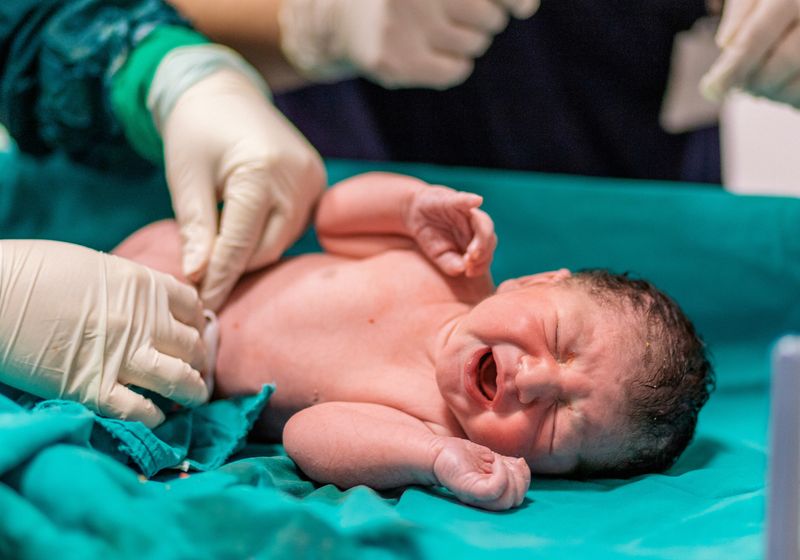
Maternal Blood May Hold Clues to Fetal Oxygen Levels
By analyzing molecular signals in maternal blood, scientists hope to develop a more reliable way to detect fetal oxygen deprivation. When a newborn trades the warmth of the womb for a breath of air and lets out a cry, everyone in the delivery room heaves a sigh of relief. But if a baby struggles to breathe, those moments can become a race against time. Oxygen deprivation during birth can cause neurological complications or be fatal, but the currently-used fetal electronic monitor—which tracks the baby’s heartbeat—does not directly indicate fetal hypoxic distress. “What's really striking is that, despite all of the advances that we've made in medicine, we're still relying on electronic fetal heart rate monitoring, which has been around for over 50 years,” said Sandy Elmehrath, a women’s health researcher at the Wyss Institute at Harvard University (the Wyss Institute). Silvi Lybbert…